
Craig rang me last March, week into the wet season, properly stressed. His Rocklea warehouse…
Warehouse Epoxy Floor Repair: Quick Fixes That Work
A forklift drops a pallet from chest height. A chemical drum springs a slow leak in the corner of a bunded zone. A loading bay clocks ten thousand wheel rotations in a single week. Even the toughest warehouse epoxy floor takes hits — and when damage shows up, every hour of downtime is costing your operation real money.
Good news though. Most warehouse epoxy floor damage is fixable, and often you don’t need to shut the whole place down to sort it out. Whether you’re running a distribution centre out in Rocklea, a manufacturing plant in Acacia Ridge, or a logistics hub somewhere across Brisbane’s southern industrial corridor, knowing how to spot the damage, fix it properly, and stop it happening again keeps your operations moving and your WHS compliance intact.
This guide walks you through the practical side of warehouse epoxy floor repair — figuring out what damage you’re dealing with, choosing between a spot fix and a full resurface, handling emergency repairs when production just can’t stop, and weighing up DIY touch-ups against calling in the pros. You’ll also get a clean prevention framework so the next repair conversation happens years from now, not next quarter.
Common Types of Warehouse Epoxy Floor Damage
Before you can fix a floor properly, you’ve got to know what you’re actually looking at. Most damage falls into one of five buckets, and each one needs a different repair approach.
- Mechanical impact damage — forklift drops, pallet strikes, and dropped tools leave chips, gouges, and cracks. Usually localised and easy to spot.
- Abrasion and wear patterns — high-traffic lanes, pivot zones near roller doors, and racking aisles show smooth shiny patches or worn-through topcoats.
- Chemical attack — battery acid from forklift charging bays, hydraulic fluid spills, and harsh cleaning solvents cause discolouration, softening, or bubbling.
- Thermal shock damage — hot tyre pickup, cold storage transitions, and steam cleaning leave the coating cracked, lifting, or losing adhesion.
- Substrate-related failures — moisture vapour transmission, concrete movement, and delamination usually show up as widespread bubbling or whole sections peeling away.
Safe Work Australia guidance treats damaged floor surfaces as a slip and trip hazard, not just an eyesore — which means diagnosis is a compliance job too.
Spot Repair Techniques for Minor Chips and Scratches
A solid maintenance team can handle most small-scale repairs in-house, without bringing in specialist contractors. Here’s the first-response toolkit.
Repairing Small Chips and Pinholes
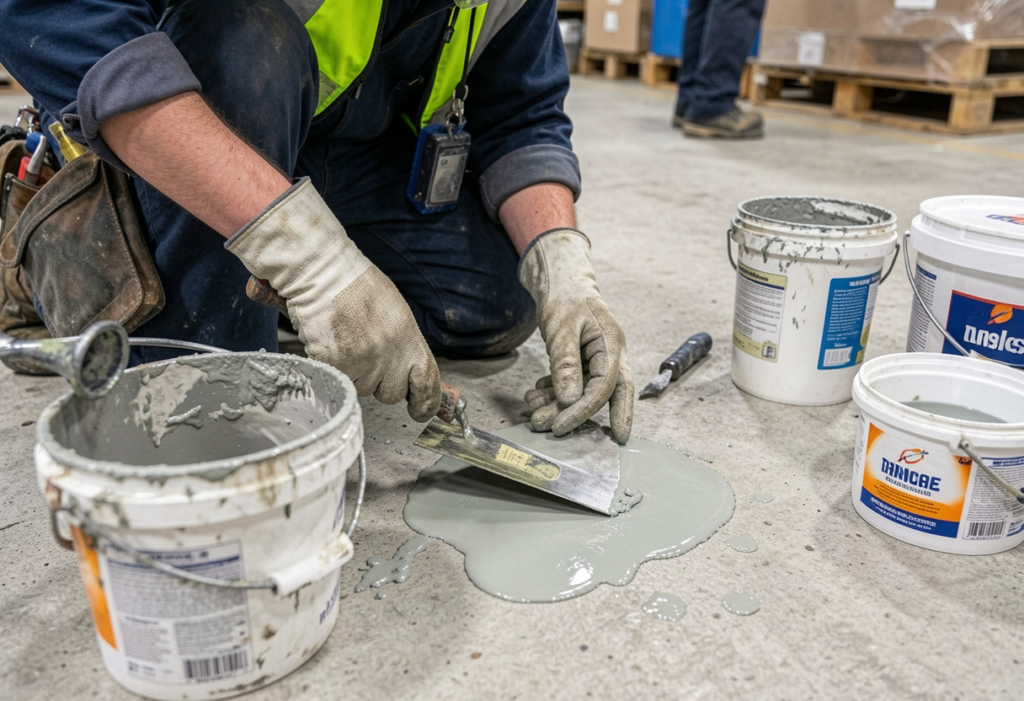
Start by cleaning and degreasing the damaged area properly. Lightly abrade the surrounding surface so the patch material has something to grip. Mix and apply your patch epoxy, level it with a trowel, and let it cure — usually 6 to 8 hours before foot traffic, 24 hours before forklifts roll over it. Big tip: match the original system’s chemistry. A polyurethane topcoat won’t bond properly to a fresh epoxy patch and you’ll be back fixing it again in six months.
Addressing Hairline Cracks and Surface Scratches
Cosmetic surface scratches usually buff out with a topcoat refresh. Structural hairline cracks are a different animal — they need chasing, which means routing the crack into a V-groove and filling it with flexible epoxy or polyurea before recoating. Cracks following a pattern across the slab? That’s substrate movement, and it needs a professional assessment.
When to Patch vs When to Resurface Damaged Areas
This is where the money decisions get made. A useful rule of thumb: if damage covers less than 30% of a contiguous floor zone and the concrete underneath is sound, spot patching does the job. Once you’re past 30%, or you’re seeing patterns that point to systemic failure — widespread delamination, multiple chemical-affected areas, recurring cracks — a full resurface gives you better value long-term.
Five factors to weigh up:
- Damage coverage area — how many square metres are affected
- Substrate integrity — is the concrete underneath still structurally sound
- Age and remaining service life of the existing coating system
- Operational disruption tolerance — can you actually stage a full resurface
- Compliance and safety thresholds — slip resistance ratings and chemical containment certification
Resurfacing isn’t a failure. It’s a strategic refresh that resets the asset’s service life and often upgrades the floor’s performance specs at the same time.
Emergency Repair Procedures for Critical Operations
When something’s gone wrong right now, you need a calm structured response — not panic.
Immediate Containment and Safety Steps
The first 30 minutes matter most. Isolate the damaged zone with hazard barriers. Contain any chemical contamination before it spreads. Photograph everything for insurance and maintenance records. Then assess the immediate slip and trip risk under your WHS Act 2011 duty of care. Documenting damage before the repair protects you if an injury claim shows up later.
Fast-Cure Repair Systems for Minimal Downtime
A few rapid options buy you time. Polyurea-based patch systems get you back to service in 1 to 2 hours. Fast-set methyl methacrylate (MMA) patches handle chemical-resistance-critical zones. Pre-blended trowel-on epoxy mortars work brilliantly for impact-damaged sections. Trade-off: faster cure means shorter pot life and tighter application windows. When the stakes are high, that’s exactly why professional installation pays for itself.
DIY Touch-Up Kits vs Professional Repair Services
DIY has a real place in warehouse epoxy floor repair, and pretending otherwise just wastes your time.
When DIY Touch-Up Kits Make Sense
Isolated chips smaller than 50mm. Surface scratches without structural compromise. Cosmetic colour-matching in low-visibility areas. Single-point spot repairs in non-critical zones. A quality kit usually includes mixed patch resin, hardener, application tools, and fine aggregate — and you’re looking at $80 to $250 for most systems.
When to Call a Professional Industrial Flooring Specialist
Escalate when damage exceeds 1 square metre, when chemical contamination has hit the substrate, when cracks keep coming back, or when you’re repairing in chemical-bunded or food-grade zones that need compliance documentation. Same goes for any situation where slip-resistance specs need re-certifying. Professional repairs come with warranties, certification paperwork, and matched-system compatibility — protection that pays off long after the job’s done.
Preventing Future Damage: Best Practices Guide
The operators who get the longest service life out of their epoxy floors aren’t the ones with the most expensive systems. They’re the ones with the most disciplined maintenance routines. Six practices that make the biggest difference:
- Schedule quarterly inspections — early-stage damage costs a fraction of what advanced damage costs to fix
- Implement load-distribution practices — proper pallet racking footings, the right forklift wheel specs, and impact-zone matting where it matters
- Establish spill response protocols — chemical, oil, and battery acid spills get addressed in minutes, not hours
- Use protective overlays in high-impact zones — drop pads near racking, runners in main forklift lanes
- Maintain consistent cleaning protocols — pH-neutral cleaners only, no harsh solvents that chew through your topcoat
- Plan for recoating cycles — most warehouse epoxy systems benefit from a topcoat refresh every 5 to 7 years, well before structural failure starts
WorkSafe Queensland workplace floor safety guidance reinforces the same point — proactive maintenance protects both your asset and your people.
Get Your Warehouse Epoxy Floor Back to Full Strength
Damaged floors don’t fix themselves, and every week you wait is another week of slip risk, compliance exposure, and operational headaches piling up. Whether you need a fast emergency patch in a Rocklea distribution centre, a full resurface in an Acacia Ridge manufacturing plant, or a quarterly maintenance plan that keeps the next repair years away, our team handles warehouse epoxy floor repair across Brisbane’s southern industrial corridor every day of the week.
Get in touch for a site assessment and a straight-up quote — no jargon, no padding, just a clear plan to get your floor sorted with minimal downtime to your operation.

This Post Has 0 Comments