
Craig rang me last March, week into the wet season, properly stressed. His Rocklea warehouse…
Can Warehouse Epoxy Flooring Handle Forklift Traffic and Heavy Equipment?
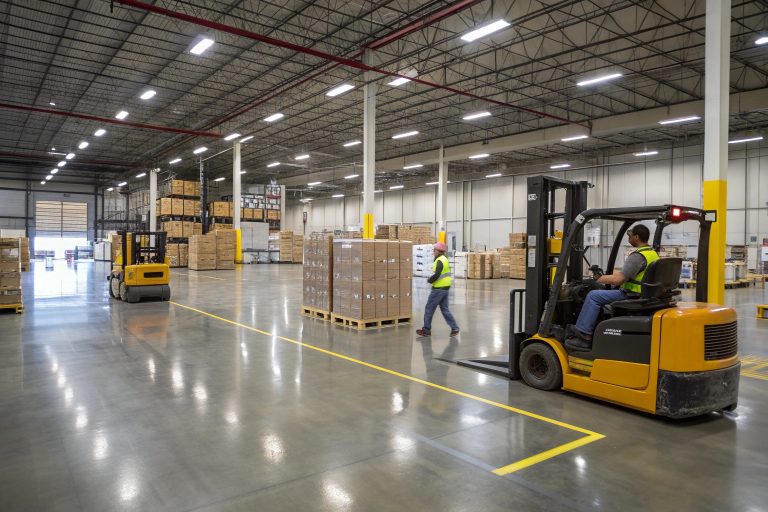
Forklifts running ten-hour shifts. Pallet jacks loaded to capacity. Steel-wheeled trolleys carving the same paths across the slab every day. If you manage a warehouse in South Brisbane — Acacia Ridge, Rocklea, Salisbury, or anywhere along the Archerfield industrial corridor — your floor is doing some of the hardest work on site.
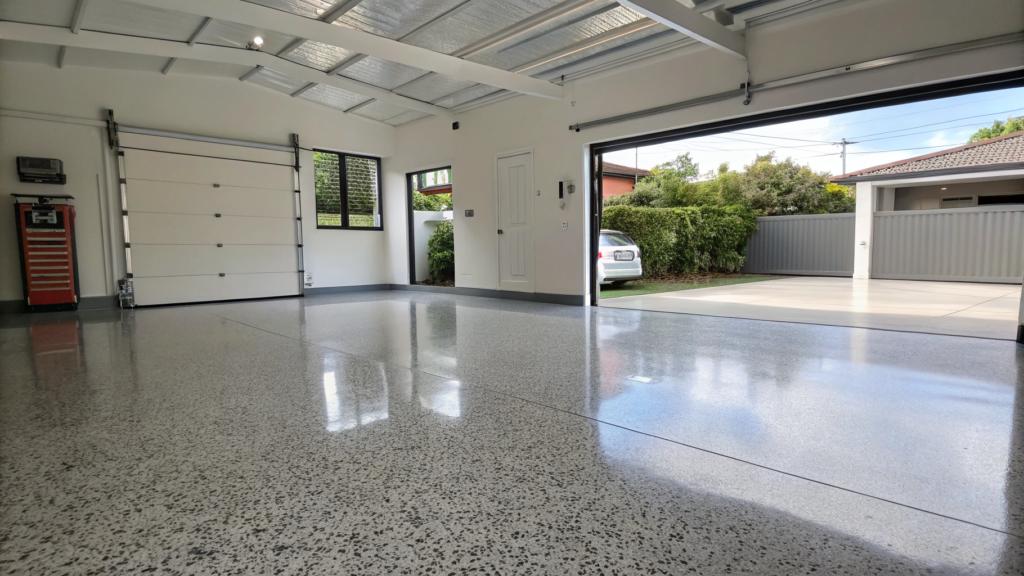
The short answer is yes. The right warehouse epoxy flooring can absolutely handle forklift traffic and heavy equipment, provided the system is specified for the load. A 200-micron decorative coating built for a residential garage will fail within months under a 2.5-tonne counterbalance forklift. A properly engineered industrial epoxy system is a different product entirely, and it’s built to outlast the equipment running over it.
This guide covers the systems that are forklift-rated, the load ratings that matter, why surface preparation makes or breaks longevity, and the compliance standards every Brisbane warehouse needs to meet.
What Makes an Epoxy Floor “Forklift-Rated”?
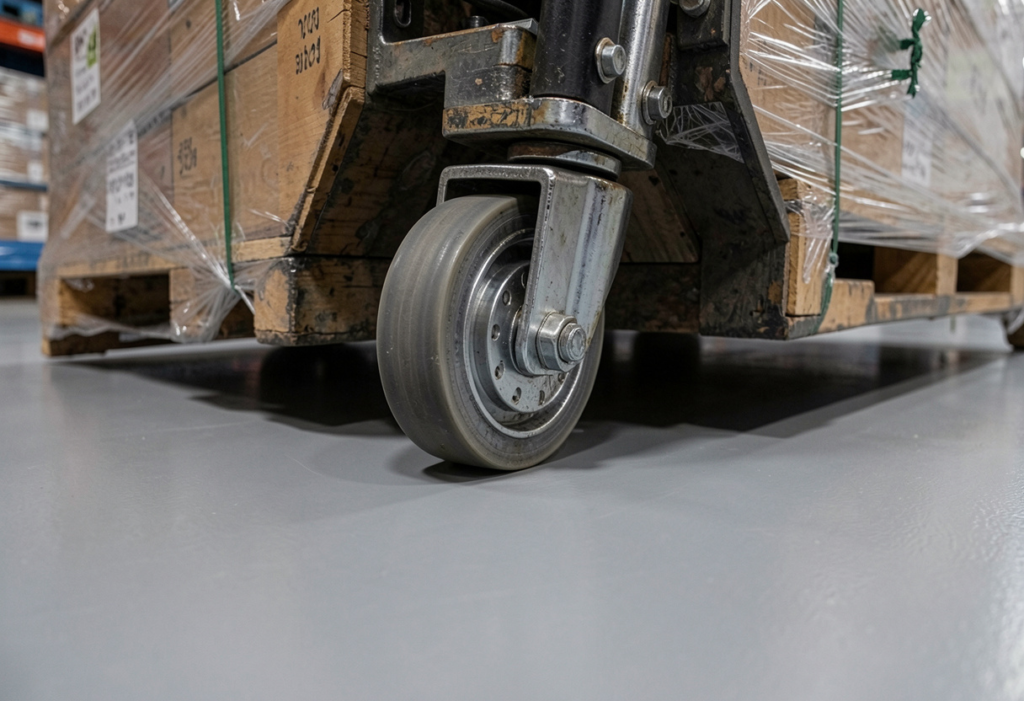
Not every epoxy is built for industrial loads. There are three system tiers worth knowing. Thin-film coatings (200–400 microns) suit light commercial use only. High-build systems (1–2 millimetres) handle medium traffic and pallet jacks. Heavy-duty systems (3–6 millimetres) are the forklift-rated category — typically trowel-applied with broadcast quartz or aluminium oxide aggregate for impact resistance.
Thickness alone isn’t the full answer. Resin chemistry, aggregate reinforcement, and bond strength to the substrate all determine whether the floor will hold up under repeated load cycles.
Load Ratings and Impact Thresholds That Matter
Compressive strength is the headline spec. A forklift-rated epoxy should hit 70–90 MPa minimum, well above the demand of a loaded 5-tonne counterbalance forklift. The catch: the concrete substrate beneath it also needs to meet AS 3600 strength requirements, or the slab becomes the weak link.
Point load matters more than most operators realise. Steel-wheeled pallet jacks concentrate force on a tiny contact patch, so they often damage floors that pneumatic-tyred forklifts roll over without issue. Pallet-drop zones need a thicker, aggregate-reinforced spec than aisles do.
Why Surface Preparation Determines How Long Your Floor Lasts
In industrial epoxy flooring, preparation is roughly 80% of longevity. The slab must be mechanically profiled — diamond grinding or shot blasting to a Concrete Surface Profile of CSP 3–5. Acid etching, still common in residential work, won’t bond properly under heavy industrial loads.
Moisture testing is non-negotiable in Brisbane’s subtropical climate. Slabs are routinely tested above 75% relative humidity, and any moisture trapped under the coating will cause delamination within the first year. Crack repair, joint treatment, and a moisture-tolerant primer round out a proper prep cycle.
Compliance and Safety Standards for Brisbane Warehouses
Slip resistance is rated under AS 4586, using R-ratings from R9 to R13. Most warehouse aisles need R10 or R11; wet zones, wash bays, and battery rooms typically require R12 or R13.
The Queensland Work Health and Safety Act 2011 places a duty of care on employers to maintain safe workplace surfaces. That means documented slip ratings, recorded inspections, and a maintenance schedule — all of which a compliance auditor may request.
Common Failure Points and How a Specified System Avoids Them
Most warehouse epoxy failures trace back to a handful of causes, all of them solvable. Delamination usually comes from skipped prep or untested moisture. Tyre marking comes from softer urethane topcoats — a chemical-resistant novolac or aliphatic polyurethane resolves it. Hot tyre pickup signals plasticiser migration from a substandard coating. Battery acid staining is a topcoat selection problem. Edge chipping at doorways comes from missed expansion joint detailing.
A properly specified system addresses each of these at the design stage, not in the warranty period.
Brisbane-Specific Considerations for Warehouse Flooring
Brisbane’s subtropical humidity is the biggest local variable. Slabs in Rocklea, Salisbury, and Acacia Ridge frequently sit above the 75% RH threshold, which rules out many standard primers and demands a moisture-tolerant system. Older industrial stock from the 1970s and 80s often has different slab characteristics from modern tilt-up construction, and the spec needs to reflect that.
Summer installation also requires planning. Slab temperature differentials between roller doors and interior zones can shorten the cure window, so installation scheduling matters as much as product selection.
Cost vs. Lifecycle for Brisbane Operators
A properly engineered industrial epoxy floor delivers 15 to 25 years of service with routine maintenance. While heavy-duty systems carry a higher upfront cost per square metre than thin-film coatings, the annualised cost — divided across the service life — is typically lower. Downtime is the other factor: fast-cure systems can return a warehouse to operation in 24 to 48 hours, which often offsets the price difference on its own.
Choosing the Right Installer for an Industrial Warehouse Project
The right installer specifies the system before they quote it. Look for manufacturer certifications, documented moisture testing, references from similar facilities, and a written warranty that covers both materials and workmanship. Vague specs, quotes without a site inspection, and missing prep details are all reasons to keep looking.
Ready to Specify the Right System for Your Warehouse?
Every Brisbane warehouse has a different load profile, slab condition, and compliance requirement. The team behind this guide offers no-obligation site assessments across South Brisbane, Acacia Ridge, Rocklea, Salisbury, and the Archerfield industrial corridor — including moisture testing, system recommendations, and indicative pricing. Get in touch to book a same-week visit and start the path to a warehouse floor coating built for the equipment it carries.

This Post Has 0 Comments