
Craig rang me last March, week into the wet season, properly stressed. His Rocklea warehouse…
Heavy Duty Epoxy Flooring for Forklifts: What South Brisbane Warehouse Owners Need to Know
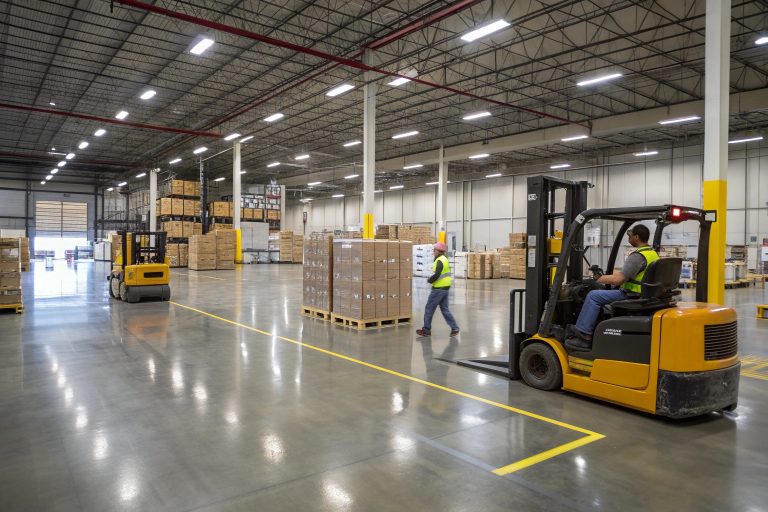
Walked through my mate Craig’s warehouse out in Rocklea last winter and watched his forklift driver swing a pallet of timber across the floor like he was parking a Commodore at Coles. The wheels left scuff marks but the floor underneath? Not a chip, not a crack, not even a scratch on the epoxy. Craig just grinned and told me he’d had that floor down for nearly seven years and the only thing it’d needed was a mop and a hose every few weeks
That’s the thing about heavy duty epoxy flooring for forklifts done properly. It can cop a flogging from 5-tonne machines, dropped pallets, hydraulic oil spills, and Brisbane’s awful summer humidity, and still look half decent on the other side. But get the spec wrong, cheap out on the system, or hire some bloke who’s never poured a warehouse floor before, and you’ll be patching cracks before your first year’s out. So let’s walk through what actually holds up under forklift traffic in South Brisbane warehouses, and what doesn’t.
Forklift Load Requirements and Epoxy System Selection
Most warehouse owners pick an epoxy based on price instead of what their forklifts actually weigh. A 2-tonne electric pallet jack and a 7-tonne LPG counterbalance need completely different floors.
Matching System to Forklift Weight
Any decent installer will ask you the unladen weight of your heaviest forklift, the maximum load capacity, and what wheels it runs. Solid polyurethane tyres punch harder into a floor than pneumatic ones. The weight tells you the compressive strength you need from the epoxy, measured in megapascals.
For 2 to 3 tonne electric forklifts, a high-build epoxy at 1.5 to 2mm thick usually does the job. Medium-duty 4 to 5 tonne operations need a self-levelling system at 3 to 4mm with a hard-wearing topcoat. Heavy industrial sites running 6 tonnes plus need a troweled epoxy mortar at 6 to 9mm. Australian Standard AS 3958 covers substrate prep, and any good installer references it when quoting.
Resin Chemistry for Brisbane Conditions
Standard bisphenol-A epoxies get brittle under repeated point loading. Polyurethane-modified epoxies handle thermal cycling better, which matters when your warehouse goes from 18 degrees overnight to 38 by lunchtime.
Steel Aggregate Reinforcement for Heavy Traffic Areas
When you’re running serious tonnage day in day out, plain epoxy on its own won’t cut it. That’s where steel aggregate reinforcement comes in, and it’s the difference between a floor lasting two years and one lasting fifteen.
How Steel Aggregate Works
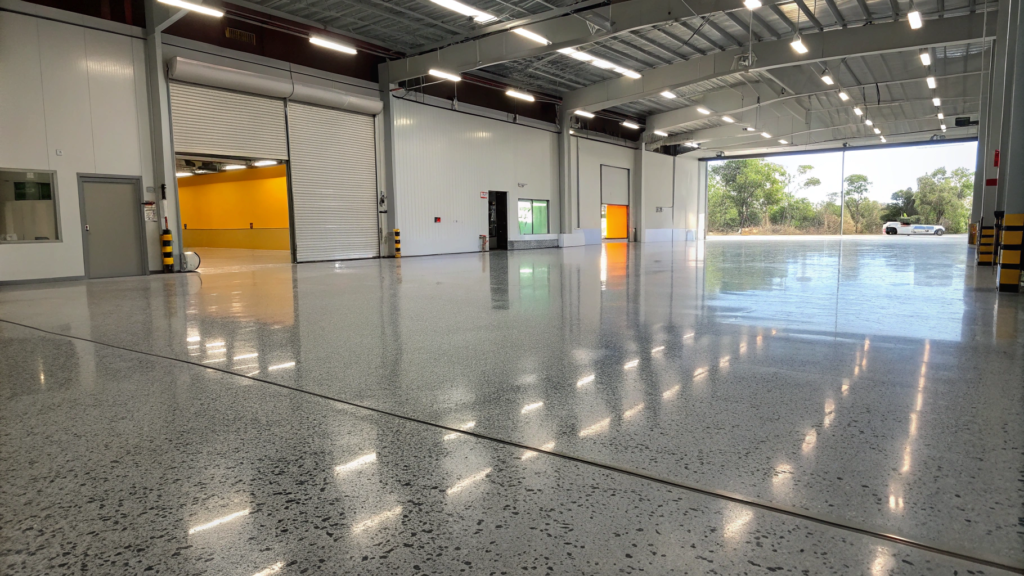
Steel aggregate is basically graded steel shot or filings mixed into the epoxy mortar before troweling. The metal particles bond into the resin matrix and create a wear surface that handles point loads from forklift wheels far better than a standard resin-only system. Think of it like reinforcing concrete with rebar, except the reinforcement is spread through every millimetre of the topcoat.
Where to Specify It
You don’t need steel aggregate across an entire warehouse. Smart spec means putting it where the punishment happens, loading dock approaches, pallet racking aisles, charging bays, and battery rooms. Standard epoxy works fine in office areas and low-traffic zones, saving you a fair chunk on the quote.
Point Load Distribution in Warehouse Environments
A loaded 5-tonne forklift doesn’t spread its weight evenly. Most of it concentrates onto small contact patches under each wheel, and that’s what destroys cheap floors.
The substrate underneath matters as much as the epoxy on top. If your concrete slab is under 25 MPa or has hairline cracks, no epoxy in the world will save you long-term. Decent installers will core test the slab and check moisture levels per AS 1884 before quoting properly. Skip that step and you’re rolling the dice.
Comparing Epoxy Thickness for Different Forklift Types
| Forklift Type | Weight Range | Recommended System | Thickness |
| Electric pallet jack | 1-2 tonne | High-build epoxy | 1.5-2mm |
| Electric counterbalance | 2-3 tonne | High-build with topcoat | 2-3mm |
| LPG counterbalance | 4-5 tonne | Self-levelling epoxy | 3-4mm |
| Diesel counterbalance | 5-7 tonne | Epoxy mortar system | 4-6mm |
| Heavy industrial | 7-10+ tonne | Troweled mortar with steel aggregate | 6-9mm |
Maintenance Schedules for High-Traffic Forklift Zones
Even the best epoxy floor needs looking after. Sweep daily to clear grit that acts like sandpaper under forklift wheels. Wash weekly with a neutral pH cleaner, never anything acidic. Inspect quarterly for chips around dock plates and rack legs, and patch small damage early before it spreads.
Every two to three years, depending on traffic, you’ll want a fresh topcoat applied. Costs about a fifth of a full reinstall and adds another decade to the floor’s life.
Case Study: 10-Tonne Forklift Operations on Epoxy Floors
Marcus runs a steel distribution yard out near Acacia Ridge. His operation moves structural beams with 10-tonne diesel forklifts twelve hours a day, six days a week. Before epoxy, he was resurfacing concrete every eighteen months.
His installer specced a 9mm troweled epoxy mortar with steel aggregate reinforcement through the main aisles, full slab prep with diamond grinding, and three coats of chemical-resistant urethane sealer on top. That was five years ago. Marcus has only had to patch two small sections where a forklift dropped a beam directly on the floor. Everywhere else still looks the same as the day it was poured.
The upfront cost was nearly triple what a basic epoxy would’ve been. But Marcus has saved more in downtime alone than he spent on the install. That’s heavy duty epoxy flooring for forklifts working the way it’s meant to.

This Post Has 0 Comments