
Craig rang me last March, week into the wet season, properly stressed. His Rocklea warehouse…
Epoxy garage floor
Do Epoxy Floors Really Work in Brisbane’s Humid Climate? A Complete 2026 Guide
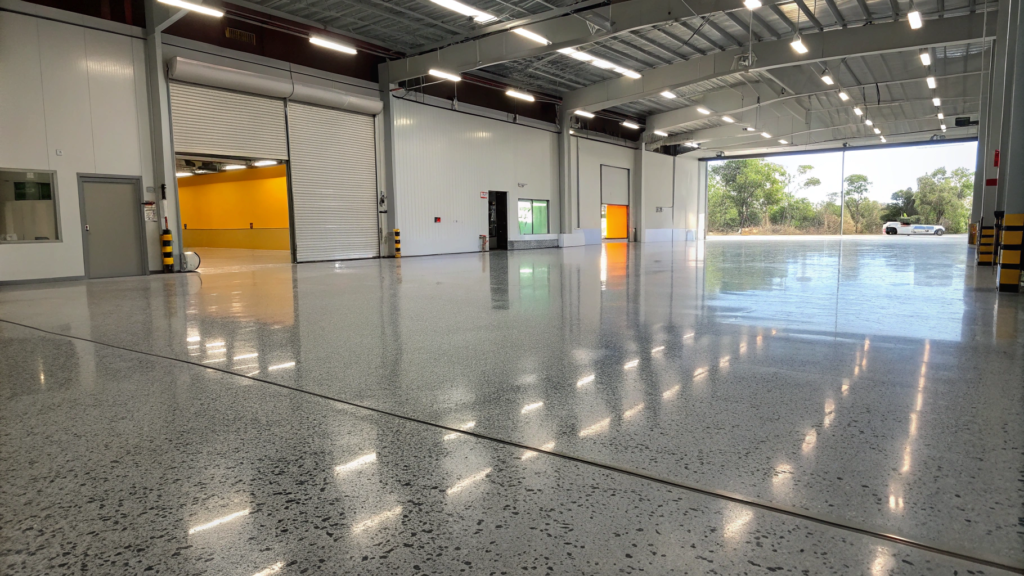
Brisbane’s subtropical climate is one of the most unique and rewarding environments to install professional epoxy flooring in Australia. The combination of warm temperatures, high ambient humidity, and a dramatic wet season actually accelerates the performance advantages of correctly specified epoxy systems — delivering floors that bond deeply, cure hard, and build genuine durability that cooler, drier southern climates simply cannot replicate.
Facility managers and homeowners across Greater Brisbane are discovering what industrial flooring specialists have known for years — a professionally installed epoxy system, engineered for Queensland conditions, performs exceptionally well decade after decade. Floors that hold their bond, maintain slip ratings, resist chemical exposure, and still look sharp after ten Brisbane summers are not the exception. They are the standard when the right system meets the right installer.
This guide covers how subtropical conditions interact with your slab, which systems are purpose-built for high-humidity environments, and what genuine long-term performance looks like across Greater Brisbane facilities.
Will Epoxy Floors Work in Brisbane’s Humid Climate?
Yes — professional epoxy floors perform exceptionally well in Brisbane’s humid subtropical climate when the correct system is specified and installed. The key factors that determine long-term performance are:
- Moisture-tolerant primer systems that bond to damp or vapour-active concrete slabs
- 100% solids epoxy formulations engineered for warm, humid cure environments
- UV-stable polyurethane or polyaspartic topcoats that resist Queensland’s intense sunlight
- Professional slab moisture testing before installation to match the system to site conditions
- Anti-slip additives rated to AS4586 for year-round wet season safety compliance
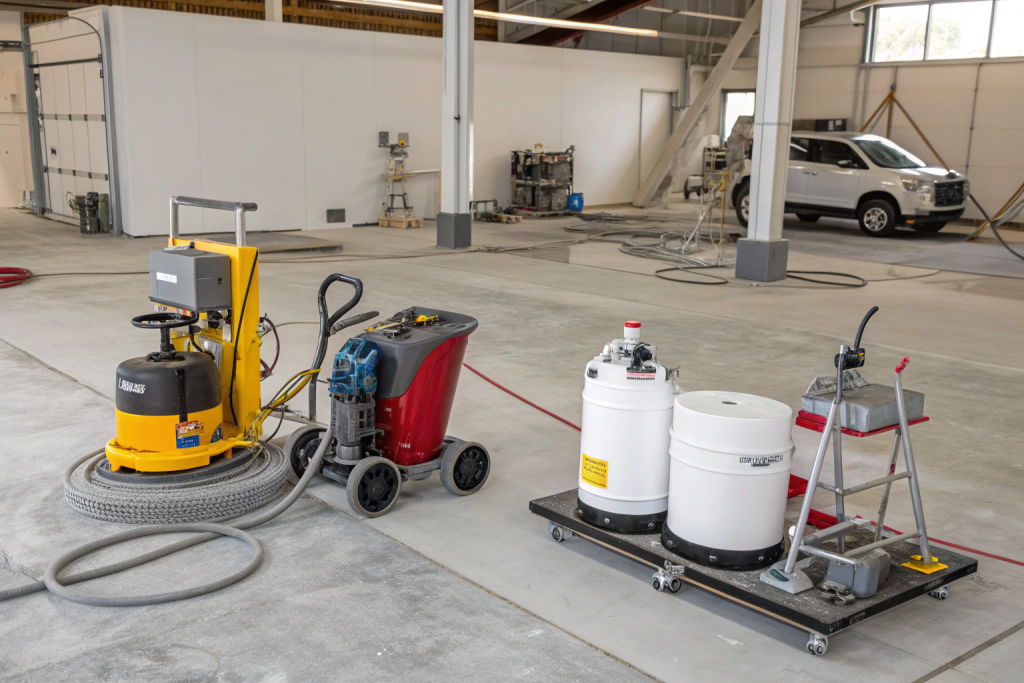
Installed by a specialist who understands Queensland conditions, epoxy flooring routinely delivers 15+ years of performance in Brisbane’s climate.
How Brisbane’s Subtropical Climate Affects Garage Floors
Brisbane’s climate sits in a category of its own among Australian capital cities. According to Bureau of Meteorology historical climate data for Brisbane, average annual relative humidity consistently sits above 60%, with summer months regularly pushing into the high 70s. These conditions create an environment that actively works in favour of warm-cure epoxy chemistry — provided the system is right.
Warm ambient temperatures throughout the year mean epoxy systems cure faster and more completely than in Melbourne or Canberra. The chemical cross-linking that gives epoxy its hardness and adhesion is an exothermic reaction — it benefits from warmth. Brisbane’s year-round thermal baseline accelerates cure times, improves film formation, and drives deeper mechanical bonding with concrete substrates.
The Role of Ambient Temperature in Epoxy Cure Quality
Professional epoxy systems specify minimum application temperatures for a reason. Below 10°C, cure times extend dramatically, and film quality suffers. Brisbane rarely sees temperatures that low — meaning the reaction that determines final hardness, chemical resistance, and bond strength runs at near-optimal conditions for the majority of the year.
How the Wet Season Interacts With Concrete Slabs
Queensland’s wet season drives significant moisture into unsealed slabs. While this is a genuine installation consideration — professional installers time their work accordingly and use moisture-tolerant primer systems — a sealed epoxy floor is specifically engineered to manage this moisture movement over the long term. The wet season is an installation scheduling factor, not a barrier to performance.
Why Regular Concrete Falls Short in High Humidity
Bare concrete is a porous material. In Brisbane’s humidity, that porosity works continuously against facility managers and homeowners — absorbing moisture during the wet season, releasing it during dry periods, and cycling year after year. Over time, this causes surface dusting, microcracking, and gradual breakdown of surface integrity that most people simply accept as the cost of having a concrete floor.
In commercial and industrial environments, the consequences are more significant. Oils, fuels, and chemicals penetrate unsealed concrete almost immediately, creating permanent staining, odour, and hygiene concerns that escalate maintenance requirements substantially. In food processing and medical contexts, uncoated concrete simply cannot meet compliance standards regardless of cleaning frequency.
The True Cost of Untreated Concrete in Brisbane Facilities
When Brisbane facility managers calculate the real cost of unsealed concrete — cleaning labour, chemical treatments, slip incident liability, OH&S compliance gaps, and eventual remediation — professional epoxy installation consistently delivers a compelling return on investment. The upfront cost is typically recovered within two to three years of eliminated maintenance spend alone.
Professional Epoxy Systems Engineered for Brisbane Weather
Not all epoxy products are equal, and the difference matters enormously in Queensland conditions. Professional-grade systems are engineered from the primer coat up to manage the specific challenges Brisbane presents — moisture-active slabs, high ambient humidity on application day, intense UV exposure, and year-round thermal cycling.
Moisture-Tolerant Primer Systems
The primer coat is the most critical component in any Brisbane epoxy installation. Moisture-tolerant primers are specifically formulated to penetrate and bond with concrete carrying elevated moisture content — a condition that causes standard primers to delaminate within months. Modified resin chemistry displaces surface moisture and forms a bond with the substrate regardless of ambient humidity on application day.
UV Stability and Topcoat Selection for Queensland Conditions
Standard epoxy topcoats yellow and chalk under UV exposure. In Brisbane’s intense sunlight — particularly relevant for garage floors and facilities with skylights — UV-stable polyurethane or polyaspartic topcoats are essential. These products maintain colour integrity and surface hardness across years of Queensland sun exposure with significantly better abrasion resistance than standard epoxy finishes.
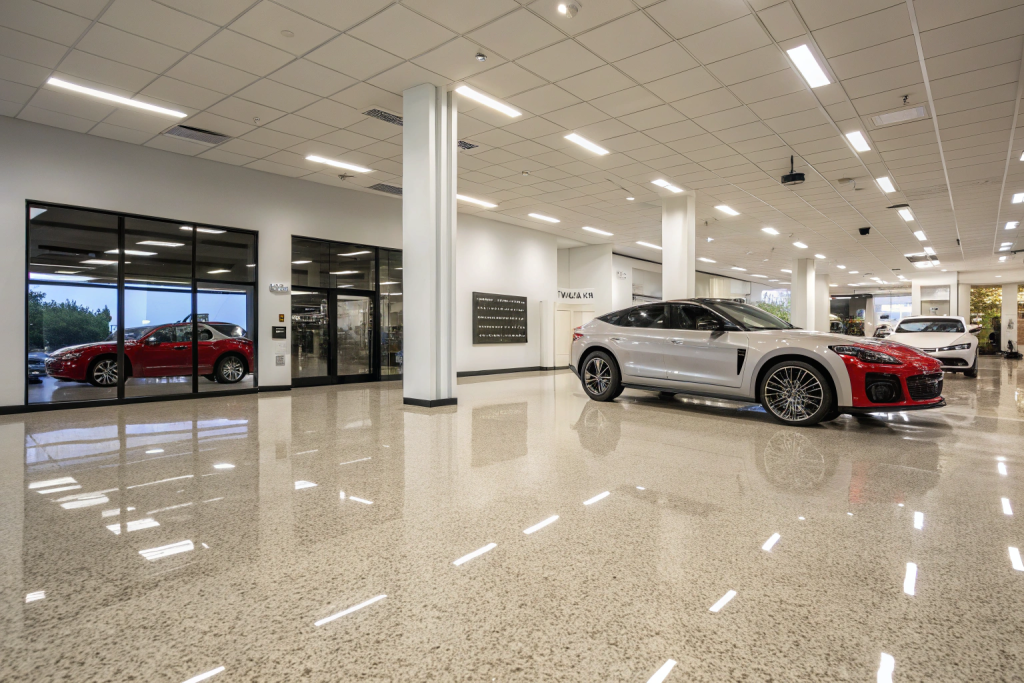
How Professional Systems Differ From Hardware Store Products
Consumer-grade epoxy kits are typically water-based, low-solids formulations designed for ease of application rather than performance. In Brisbane’s conditions, they frequently fail within 12-24 months — peeling, yellowing, or losing adhesion as moisture vapour migrates through the slab. Professional two-part systems carry significantly higher solids content, require professional surface preparation, and are specified for the actual conditions of the installation site.
Moisture Vapour Transmission and Floor Performance
Moisture vapour transmission (MVT) is the movement of water vapour through a concrete slab from below the surface. In Brisbane, where soil moisture levels remain elevated for extended periods following the wet season, MVT is a consistent factor that professional installers account for before committing to a system specification.
When MVT is not measured prior to installation and an incompatible system is applied, the consequences are predictable — osmotic blistering, delamination, and bond failure typically visible within six to eighteen months. This is the single most common reason for premature epoxy floor failure in southeast Queensland, and it is entirely preventable.
Professional installers conduct calcium chloride or in-situ relative humidity testing prior to specification. Where MVT readings are elevated, specialist moisture-mitigation primers or epoxy barrier coats are applied before the decorative system. Modern moisture-tolerant systems are engineered to perform through ongoing vapour movement rather than simply blocking it — asking your installer how they test for MVT is one of the most important questions before any Brisbane epoxy project begins.
Seasonal Considerations for Brisbane Installations
While professional epoxy systems can be installed year-round in Brisbane, the dry season months of May through September deliver ideal conditions — consistently lower ambient humidity, stable temperatures in the 18-26°C range, and reduced slab moisture levels that maximise cure quality and final film performance.
Summer installations during the wet season require additional planning. Experienced installers adapt by selecting slower-reacting hardener systems, monitoring dew point carefully, and scheduling work during the driest part of the day. For facility managers, scheduling between May and August typically allows the fastest project turnaround and shortest cure period before returning to full operational use.
A specialist who genuinely understands Queensland conditions will deliver an excellent result in January just as readily as in July. The difference lies in their diagnostic approach and system selection — not in waiting for perfect weather.
Anti-Slip Ratings and Wet Season Safety Compliance in Brisbane
Brisbane’s wet season transforms surface slip risk on uncoated or improperly finished floors. Water tracked in from outdoor areas, condensation from humidity changes, and increased wet-surface exposure between November and March have direct workplace health and safety implications for commercial and industrial operators across Greater Brisbane.
Australian Standard AS4586 classifies slip resistance across surface types and applications. Professional epoxy systems incorporate anti-slip additives — typically aluminium oxide, silicon carbide, or polymer grit — broadcast into the topcoat to achieve and maintain the required classification. The appropriate rating depends on the intended use: pedestrian commercial areas, wet industrial zones, and food processing environments each carry specific requirements.
WorkSafe Queensland’s floor and ground surfaces guidance places clear obligations on employers and property managers to maintain surfaces meeting slip resistance standards. A professionally installed epoxy system with documented slip resistance ratings provides both the physical safety performance and compliance documentation that protects operators from liability exposure. Specifying the correct AS4586 rating is a standard part of professional system design — not an optional upgrade.

Ready to Specify the Right System for Your Brisbane Property?
Every Brisbane slab is different. Moisture levels, concrete porosity, existing surface condition, and operational demands all influence correct system specification. The most reliable way to determine what your floor needs is a professional on-site assessment by an installer who works exclusively in Queensland conditions.
Epoxy Experts South Brisbane serves Greater Brisbane from 11 Hugo Pl, Mansfield QLD 4122. Call 07 4800 0057, visit epoxyexpertssouthbrisbane.com, or find us on Google Maps.
