
Craig rang me last March, week into the wet season, properly stressed. His Rocklea warehouse…
Can Flake Epoxy Be Applied Over Existing Concrete Floors in Brisbane?
We get this question constantly. A Brisbane homeowner calls us, a bit embarrassed, and says something like: “Look, my garage floor’s been through it — oil stains, a couple of cracks, maybe some dodgy sealer I put on years ago. I’m guessing you can’t do much with it?”
Nine times out of ten, we can.
Old concrete doesn’t automatically disqualify you from getting a flake epoxy floor. The real question isn’t how old your slab is — it’s whether it’s been properly assessed and prepared.
This guide walks you through what makes existing concrete suitable for flake epoxy in Brisbane, what preparation different concrete conditions need, and what problems have to be fixed before coating begins. By the end, you’ll know exactly where your floor stands.
In This Guide
- Assessing Your Existing Concrete for Flake Epoxy Readiness
- Surface Preparation Requirements for Different Concrete Ages
- Common Concrete Problems and How We Fix Them
- When Existing Concrete Needs Repair Before Flake Application
- Brisbane Concrete Types and Their Flake Epoxy Compatibility
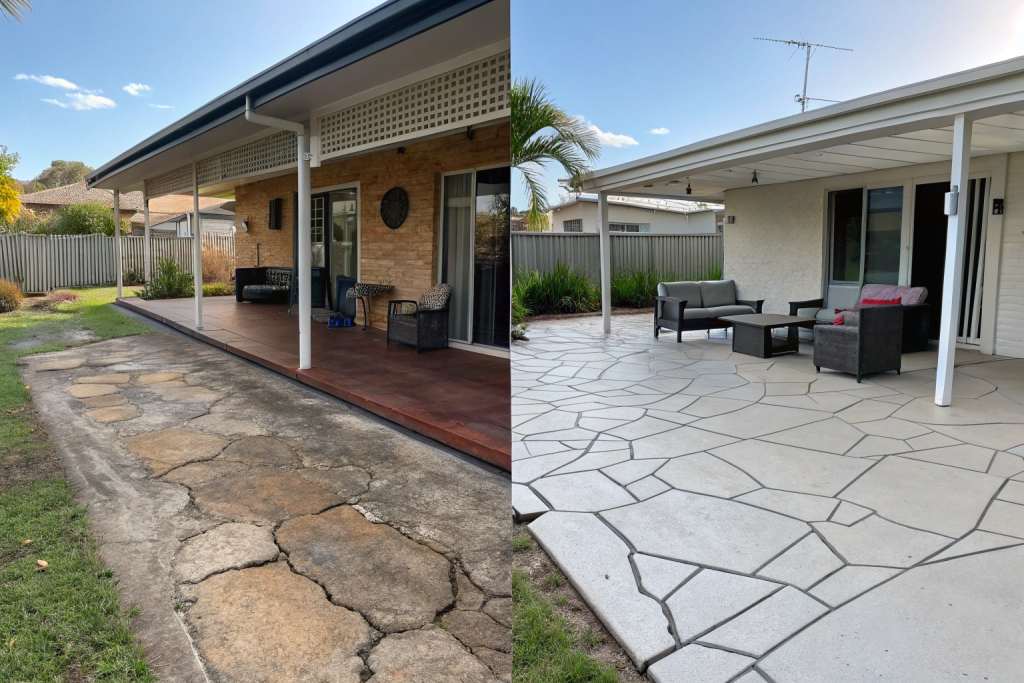
Can you apply flake epoxy over existing concrete?
Yes — flake epoxy can be applied over most existing concrete floors in Brisbane without demolition. Success comes down to three factors: concrete condition, surface preparation, and moisture levels.
A professional installer will check for:
- Structural integrity — no deep cracking or slab movement
- Moisture vapour transmission — especially important in Brisbane’s humid subtropical climate
- Previous sealers or coatings — these prevent epoxy from bonding properly
- Surface profile — concrete must be ground to create mechanical adhesion
- Active cracks or contaminants — these need repair before any coating begins
When these conditions are met and preparation is done correctly, existing concrete is a strong base for a long-lasting flake epoxy finish.
Assessing Your Existing Concrete for Flake Epoxy Readiness
Assessment is the first step — not guesswork. The condition of your slab determines the preparation method, the products used, and whether repair work is needed first. Here’s what that covers.
The Moisture Test — Why It Matters More in Brisbane
Brisbane’s subtropical humidity makes moisture vapour transmission a bigger risk here than in cooler climates. A basic plastic sheet test can indicate a problem, but a calcium chloride test gives a professional-grade reading. High moisture doesn’t automatically disqualify a slab — it may just mean a moisture barrier primer is needed.
Checking for Previous Sealers or Coatings
Epoxy won’t bond to an existing coating. Water beading on the surface is a strong sign one’s been applied. Diamond grinding removes most previous coatings, but heavily built-up layers may need additional passes.
Structural Integrity Check
Not all cracks are equal. Surface cracks can be filled. Cracks showing vertical displacement or slab movement are a different problem — and in some cases, worth a structural engineer’s opinion before coating begins.
Surface Preparation Requirements for Different Concrete Ages
Our concrete surface preparation service covers all of these methods across every slab age. Older concrete isn’t necessarily worse — but it behaves differently. Understanding how preparation changes across different slab ages is part of what separates a professional installation from a rushed one.
| Concrete Age | Typical Condition | Prep Method | Special Considerations |
|---|---|---|---|
| Under 12 months | Still curing, possible laitance | Light grind, laitance removal | Must confirm full cure before coating |
| 1–10 years | Generally stable | Diamond grind, degrease | Check for sealer application history |
| 10–25 years | May show wear, minor cracking | Full grind, crack repair | Assess for previous DIY coating attempts |
| 25+ years | Variable — staining, spalling likely | Full prep, possible patching | Moisture barrier often recommended |
A few things worth knowing across all ages: new concrete actually needs more curing time, not less preparation. Older concrete often responds better to grinding because the surface has hardened. And Brisbane slabs over 20 years old commonly show efflorescence — a chalky mineral deposit that has to be fully removed before any coating goes down.
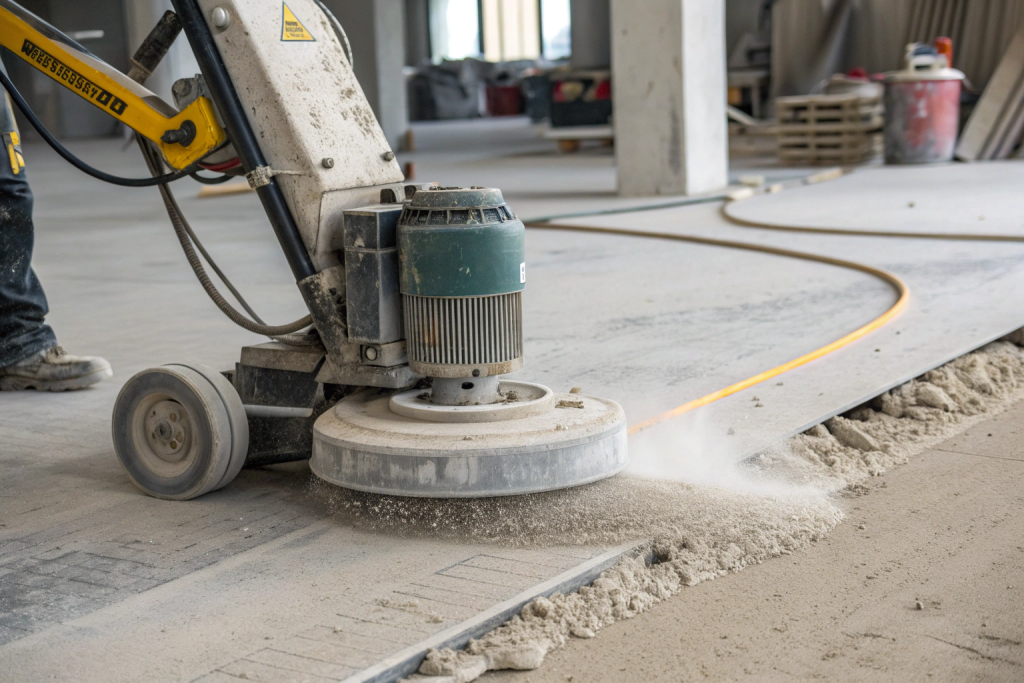
Common Concrete Problems and How We Fix Them
Most concrete problems are solvable. If you’re looking at your slab and thinking it’s too far gone for flake epoxy over existing concrete in Brisbane, chances are you’re wrong. Here’s what we see regularly on Brisbane properties — and what gets done about it.
- Oil and grease contamination — degreasing agents combined with mechanical grinding; this can’t simply be coated over
- Hairline surface cracks — filled with flexible polyurea filler before the base coat goes down
- Larger structural cracks — routed, cleaned, and filled; movement cracks may need control joint treatment
- Spalling and surface pitting — skim coat or epoxy filler applied to level the surface
- Efflorescence — acid wash treatment followed by thorough neutralisation and rinse
- Previous paint or sealer — full diamond grind back to bare concrete required
- Uneven or sloped surfaces — assessed for levelness; severe cases may need self-levelling underlayment
Most of these problems are more common than you think — and all of them are fixable.
When Existing Concrete Needs Repair Before Flake Application
Repair isn’t a dealbreaker — it’s a normal part of professional installation. Setting honest expectations upfront is part of what a good assessment does. Here’s what typically needs to be addressed before any flake epoxy coating begins:
- Cracks wider than 3mm require filling before any coating starts
- Active rising damp or hydrostatic pressure requires specialist treatment first
- Spalled areas deeper than 10mm typically need patching compound and cure time
- Concrete contaminated with years of embedded oil may need multiple degreasing rounds
- Slabs with previous failed epoxy or paint need full mechanical removal — no shortcuts
Repair adds time and sometimes cost. But it’s what separates a floor that lasts 2 years from one that lasts 15. A professional assessment identifies all repair needs upfront so there are no surprises mid-job — and no corners cut to keep a quote looking attractive.
Brisbane Concrete Types and Their Flake Epoxy Compatibility
This is where local knowledge really counts. Brisbane’s subtropical climate, building era, and property types all produce different concrete conditions — and each one responds to flake epoxy application a little differently.
Residential Garage Slabs
The most common substrate we work with. Brisbane garage slabs are typically 100mm thick, poured on compacted fill, and show up with oil staining, sealer history, or shrinkage cracks. Generally excellent candidates for flake epoxy with standard preparation.
Outdoor Entertaining Areas and Pool Surrounds
These slabs cop a lot — UV exposure, moisture, and temperature cycling year-round. They need a slip-resistant finish that meets AS/NZS 4586 compliance, and an outdoor-rated topcoat is non-negotiable. Brisbane’s UV intensity will degrade a standard polyurethane topcoat faster than most people expect.
Commercial and Warehouse Floors
Heavier slabs — typically 150mm or more — often contaminated with oils, chemicals, or forklift tyre marks. These jobs need an industrial-grade primer and a higher build epoxy system. Downtime planning is also part of the conversation for any business that can’t afford to shut a floor down for days.
Older Brisbane Homes — Pre-1980 Slabs
These slabs are more likely to show carbonation and surface degradation. They also tend to benefit the most from a flake epoxy transformation — the visual difference is dramatic. A moisture barrier primer is almost always recommended on slabs of this age.
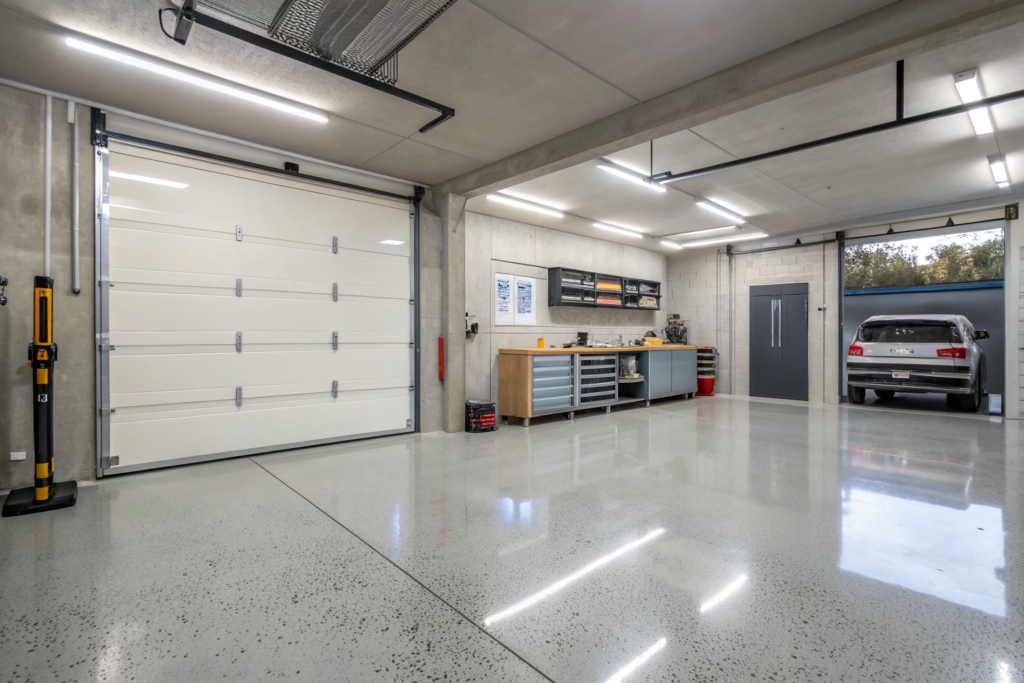
Ready to Find Out If Your Concrete Qualifies?
You don’t need to guess whether your existing concrete floor is a candidate for flake epoxy. A professional assessment gives you a straight answer — and it costs you nothing to find out.
At Epoxy Flooring Masters South Brisbane, we assess your slab, walk you through exactly what preparation is needed, and give you a written quote with no surprises. Most Brisbane floors qualify. Let’s find out if yours does.
Book your free on-site concrete assessment today.
📞 07 4800 0057
Serving Brisbane and surrounding suburbs — we respond to all enquiries within 24 hours.
We visit your property and assess the concrete. You receive a written quote with full preparation details included. Installation is scheduled at a time that suits you.
