
Craig rang me last March, week into the wet season, properly stressed. His Rocklea warehouse…
How do I maintain my epoxy garage floor?
Complete Brisbane Epoxy Floor Maintenance Guide | Keep It Perfect
How to Maintain Your Epoxy Garage Floor in Brisbane: The Complete Guide
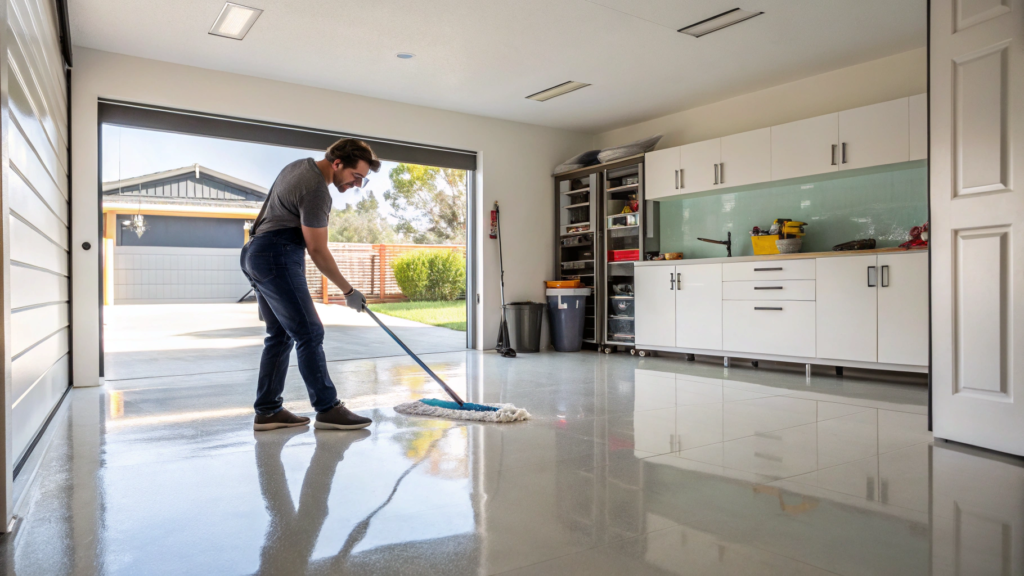
Epoxy garage floors are among the smartest flooring investments a Brisbane homeowner can make — durable, chemical-resistant, and built to handle the demands of Queensland’s climate when properly maintained. With the right routine in place, your floor will stay looking sharp, perform safely underfoot, and hold its value for decades to come.
This guide gives you everything you need to keep your epoxy garage floor in peak condition year-round. From simple daily and weekly cleaning habits to wet season protocols, oil spill response, and seasonal care tips specific to Brisbane’s subtropical environment — you’ll have a clear, practical maintenance plan that protects your investment and extends your floor’s lifespan well beyond the 20-year mark.
How to Maintain an Epoxy Garage Floor in Brisbane
Maintaining an epoxy garage floor in Brisbane requires a consistent routine tailored to Queensland’s subtropical climate. Follow these core steps to protect your investment:
- Sweep or dust mop daily to remove grit and debris that can scratch the surface
- Mop weekly using warm water and a pH-neutral cleaner — avoid acidic or bleach-based products
- Wipe up oil and chemical spills immediately to prevent staining or coating breakdown
- Increase cleaning frequency during the wet season when tracked-in moisture and debris peaks
- Inspect the surface every 3–6 months for chips, cracks, or delamination
- Apply a topcoat refresh every 3–5 years, depending on traffic levels and UV exposure
- Keep heavy equipment on rubber mats to distribute load and reduce surface stress
Consistent care keeps your epoxy floor performing safely and looking professional for 20+ years.
Table of Contents
- Daily and Weekly Cleaning Routines
- Brisbane Weather-Specific Maintenance Tips
- Dealing with Oil Stains and Chemical Spills
- Seasonal Maintenance During Wet Season
- Warning Signs Your Floor Needs Professional Attention
- Extending Your Epoxy Floor’s 20-Year Lifespan
Daily and Weekly Cleaning Routines
Keeping your epoxy garage floor in top condition starts with simple, consistent habits — and the good news is that epoxy’s non-porous surface makes routine cleaning faster and easier than almost any other floor type.
A quick daily sweep or dust mop removes the fine grit, sand, and debris that accumulates from foot traffic, vehicles, and Brisbane’s outdoor environment. Left on the surface, abrasive particles act like sandpaper underfoot, gradually dulling your floor’s finish over time. A soft-bristle broom or microfibre dust mop takes under five minutes and prevents the majority of surface wear before it starts.
Once a week, mop the floor using warm water and a pH-neutral cleaner. Avoid anything acidic, ammonia-based, or bleach-heavy — these strip the topcoat and compromise the coating’s long-term bond. Diluted dish soap works well as a budget-friendly option. For best results, use a microfibre mop rather than a traditional string mop, which tends to push dirty water around rather than lifting it. Rinse with clean water and allow to air dry.
| Safe Cleaning Products | Products to Avoid |
|---|---|
| pH-neutral floor cleaner | Bleach or bleach-based cleaners |
| Diluted dish soap | Ammonia-based products |
| Warm water | Acidic cleaners (vinegar, citrus) |
| Microfibre mop | Steel wool or abrasive pads |
Brisbane Weather-Specific Maintenance Tips
Brisbane’s subtropical climate brings maintenance considerations that homeowners in cooler, drier parts of Australia simply don’t face. Humidity, UV exposure, and thermal cycling all affect your epoxy floor’s long-term performance in ways that are worth understanding.
High humidity doesn’t damage a properly installed epoxy floor — but it does accelerate the buildup of surface grime and can create slippery conditions when moisture tracks in from outside. Ensuring your garage has adequate ventilation is particularly important during the summer months when humidity regularly exceeds 80%. A simple door threshold strip reduces the amount of wet debris tracked in from driveways and significantly cuts your cleaning workload during the warmer months.
UV exposure is another factor unique to the Brisbane environment. Garages with the door left open for extended periods — especially those facing north or west — expose flooring to direct sunlight that can degrade certain epoxy formulations over time, causing yellowing or surface chalking. If this applies to your property, it’s worth asking your installer about UV-stable polyurethane topcoats that significantly extend colour and gloss retention. Brisbane’s temperature swings are also worth monitoring — thermal expansion and contraction can cause hairline cracking around control joints, particularly in older installations. Catching these early keeps moisture from working its way into the substrate.
For current climate and humidity data specific to your Brisbane suburb, the Bureau of Meteorology provides detailed regional records that can help you plan your seasonal maintenance schedule.
Dealing with Oil Stains and Chemical Spills
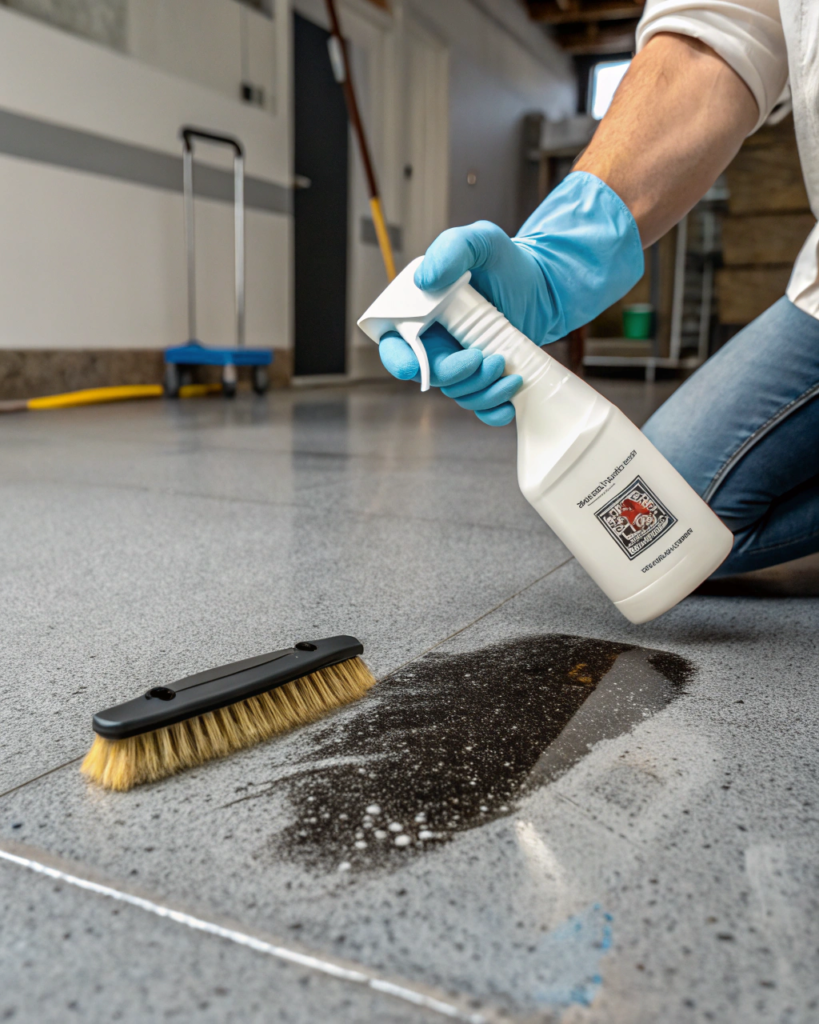
Epoxy’s chemical resistance is one of its greatest strengths — but it isn’t unconditional. Speed and the right technique are everything when it comes to spill response, and developing good habits here will keep your floor looking clean and performing well for years.
For oil, grease, fuel, and most automotive chemicals, act immediately. Blot — don’t wipe — the spill with an absorbent cloth or paper towel to lift the bulk of the liquid first. Follow up with a pH-neutral degreaser and warm water, working from the outside of the spill inward to prevent spreading. Rinse thoroughly and dry. Most fresh spills on a well-maintained epoxy surface will clean up completely with this approach.
If a stain has had time to set, apply a commercial epoxy-safe degreaser and allow it to dwell for 5–10 minutes before scrubbing with a soft-bristle brush. Steel wool and abrasive pads are off the table — they scratch the topcoat and create dull patches that are difficult to restore. For stubborn stains that don’t respond to degreaser treatment, contact your installer before attempting stronger chemical solutions. Some solvents can soften or lift the coating entirely if used incorrectly, turning a surface stain into a structural repair job.
Quick tip: Keep a small spill kit in your garage — a roll of paper towel, a bottle of pH-neutral degreaser, and a soft brush. Being able to respond within the first two minutes makes a significant difference to the outcome.
Seasonal Maintenance During Wet Season
Brisbane’s wet season — roughly November through March — puts more demand on garage floors than any other time of year. Higher rainfall, increased foot traffic, and humidity spikes combine to create conditions that accelerate surface wear if you’re not prepared going in.
Before the season arrives, take the time to inspect your floor’s surface and perimeter seals. Check that floor-to-wall junctions are intact and that drainage around your garage entry is functioning properly. A proactive surface inspection in October can identify areas of thinning topcoat or micro-cracking before wet season moisture has the chance to worsen them — and addressing minor issues before the season is always more cost-effective than repairing them after.
During peak wet season, increase your mopping schedule from weekly to twice weekly. Tracked-in mud, wet leaves, and debris from Brisbane’s summer storms carry fine abrasives and organic material that break down the surface coating with repeated exposure. Placing a heavy-duty door mat at the garage entry captures a significant portion of this debris before it reaches your floor, making your cleaning routine faster and your floor’s finish last longer.
For guidance on slip resistance requirements and wet surface safety standards, WorkSafe Queensland provides practical resources applicable to both residential and commercial garage environments.
Warning Signs Your Floor Needs Professional Attention
A well-maintained epoxy floor should look and perform consistently for years. When it doesn’t, the signs are usually visible — and catching them early prevents minor issues from becoming costly repairs or safety concerns.
Surface and structural warning signs to watch for include peeling, bubbling, or delamination of the coating layer; hairline cracks extending beyond control joints; persistent dull or hazy patches that don’t respond to cleaning; visible moisture or efflorescence beneath the surface; and a soft or spongy feel underfoot in localised areas. Any of these indicates that the coating system is under stress and warrants a professional assessment before the situation escalates.
From a safety perspective, any degradation of your floor’s slip resistance is a priority concern — particularly in a Brisbane garage environment where wet season moisture and oil exposure are regular factors. If your floor’s surface texture has worn smooth or you’re noticing reduced traction in wet conditions, arrange a professional inspection promptly. Under AS4586 slip resistance classification standards, a floor that no longer meets its original rating in wet conditions presents a genuine liability risk for your household and any visitors or contractors on the premises.
The good news is that most issues identified early are straightforward to address. If you’re seeing any of these warning signs, the team at Epoxy Experts South Brisbane can assess your floor and walk you through your options — no obligation, no guesswork. Call us on 07 4800 0057 or visit us at 11 Hugo Pl, Mansfield, QLD 4122.
Extending Your Epoxy Floor’s 20-Year Lifespan
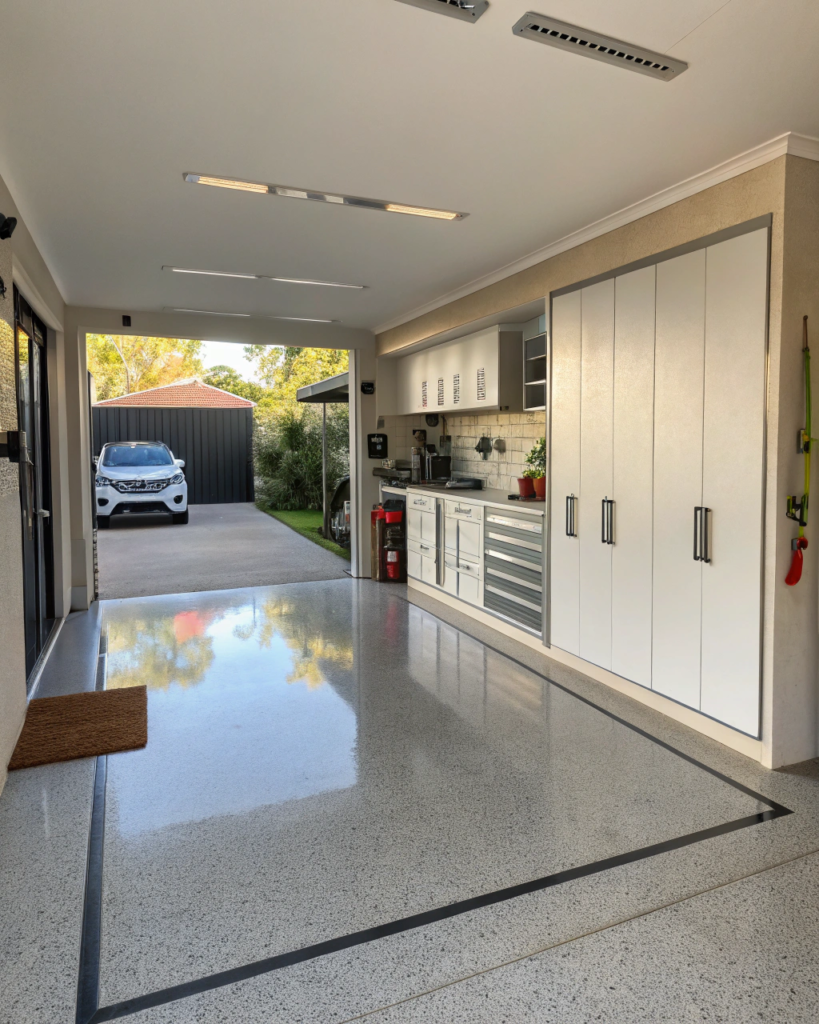
A professionally installed epoxy floor is designed for longevity — and reaching the 20-year mark in peak condition is entirely achievable with a proactive approach to care and periodic professional servicing.
The topcoat is your floor’s primary defence layer, and maintaining it is the single most effective thing you can do for long-term performance. Depending on traffic levels and UV exposure, a topcoat refresh every 3–5 years adds significant life to the overall system without the cost and disruption of a full reinstallation. This is particularly relevant for Brisbane garages with north or west-facing aspects, or those used as workshops with regular heavy equipment traffic.
Beyond the topcoat, a handful of protective habits add years to your floor’s finish with minimal effort. Use rubber or felt pads under heavy equipment and tool storage units to distribute load and prevent point pressure damage. Place entry mats at all access points to capture grit before it reaches the floor surface. Avoid dragging sharp or heavy objects across the coating. And when parking vehicles after highway driving, allow tyres to cool before they contact the epoxy surface — hot rubber can temporarily bond to the coating and leave marks that are difficult to remove cleanly.
Even a low-maintenance floor benefits from professional inspection every 2–3 years. A qualified epoxy flooring technician can identify substrate movement, early delamination, and topcoat thinning well before they become visible to the untrained eye — keeping your floor performing at its best, your warranty conditions intact, and your investment protected for the long haul.
Ready to protect your epoxy floor the right way?
The team at Epoxy Experts South Brisbane offers free floor inspections across South Brisbane, Logan, and the Redlands. We’ll assess your current coating condition and give you an honest maintenance recommendation with no obligation.
📍 11 Hugo Pl, Mansfield QLD 4122 📞 07 4800 0057 🌐 epoxyexpertssouthbrisbane.com
Whether your floor needs a straightforward clean-up routine or a full professional assessment, get in touch with the Epoxy Experts South Brisbane team today and keep your investment performing at its best.
